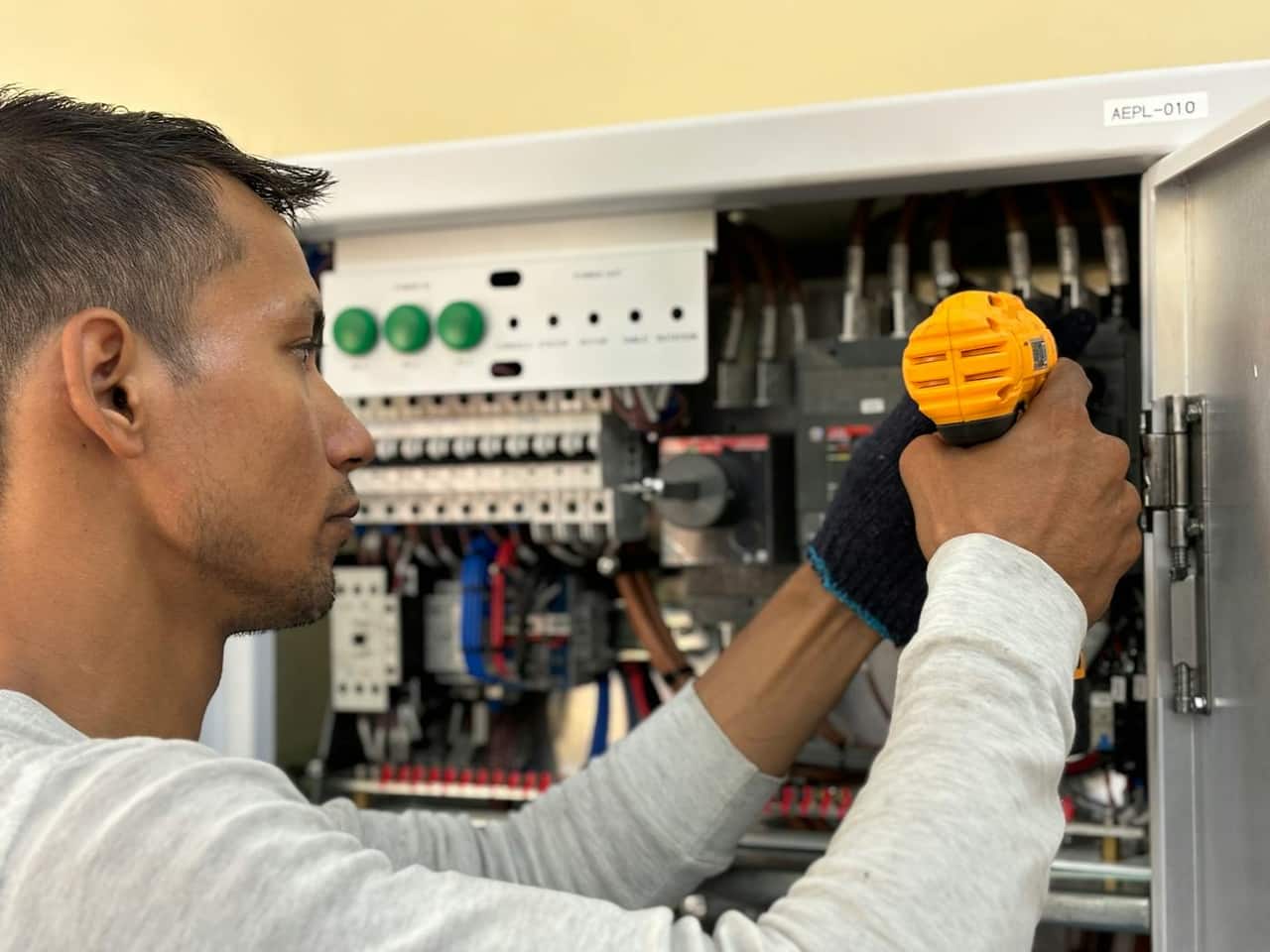
What an electrical RAMS has to prove
Electrical RAMS get reviewed harder than most trades because the headline risk is fatal and the law is explicit. The Electricity at Work Regulations 1989 require work on or near live conductors to be avoided unless it's unreasonable in all the circumstances — which means your RAMS has one central job: prove the work is planned dead, and that the isolation is real. A reviewer wants to see the circuit identified, the point of isolation named, lock-off with a personal padlock, and proving dead with a GS38-compliant two-pole tester against a known source.
More detail
Everything else hangs off that spine. Consumer unit replacements add the meter-tails problem (you don't work on the DNO's equipment — say how supply-side isolation is arranged). Testing and commissioning adds controlled re-energisation. First and second fix on sites adds coordination: other trades drilling into your cable routes, and your operatives working near services that someone else installed.
Live working: justify it or drop it
If any part of the task is live — fault-finding, certain testing, work in energised enclosures — the RAMS must carry a specific justification under EAWR regulation 14 and the extra controls that go with it: insulated tools, appropriate PPE, accompaniment where needed, and a defined exclusion around the work. The most common electrical rejection is a casual line like "live working may be required" with no justification. Either justify it properly or state plainly that no live working will take place.
More detail
Competence evidence matters more in this trade than any other except gas. Name the qualifications (18th Edition, NVQ, testing quals like 2391 where relevant), the safe-isolation training, and who is authorised to isolate. If an apprentice is on the job, say how they're supervised.
The site context most electrical RAMS forget
Domestic work brings occupants and pre-2000 asbestos (drilling boards, lifting floors, old switchgear flash pads). Commercial work brings shared distribution boards — your isolation can kill someone else's supply, and someone else's re-energisation can kill you, which is why permit-to-work systems exist on multi-trade sites. Outdoor and groundworks-adjacent jobs bring buried and overhead services. A good electrical RAMS reads like it knows which of these worlds the job lives in.
More detail
Finish with certification: what gets tested, what certificate is issued (EIC/MEIWC), and who notifies Building Control for notifiable domestic work. PCs treat the certification plan as evidence the installer works to BS 7671 rather than just claiming to.
Electrical RAMS FAQs
Does every electrical job need a RAMS?
Commercial sites and principal contractors will ask for one almost every time. For domestic work it's increasingly requested by builders and property managers. Given the fatal headline risk, a short site-specific RAMS is standard practice for anything beyond like-for-like accessory swaps.
What does a PC look for first in an electrical RAMS?
The isolation spine: which circuit, isolated where, locked off how, proved dead with what. If that's vague, the rest of the document doesn't get read. Second is competence — quals and safe-isolation training by name.
Can I include live testing in my RAMS?
Yes, where it's genuinely required (e.g. earth-loop impedance, RCD testing on an energised installation) — but treat it as live working: justify it, list the GS38-compliant instruments and the controls. Routine fault-finding live "because it's quicker" won't pass review.
Who signs the RAMS off?
A competent person on your side — usually the qualified electrician or supervisor running the job — reviews and signs it, and operatives sign the briefing record. The principal contractor reviews it but doesn't own it; it stays your document.
How do I produce one quickly per job?
The report builder's consumer-unit report asks the job questions that matter (occupied? pre-2000? live working? tails disturbed?) and writes the isolation procedure into the document. Free during early access.