What a scaffolding RAMS is really judged on
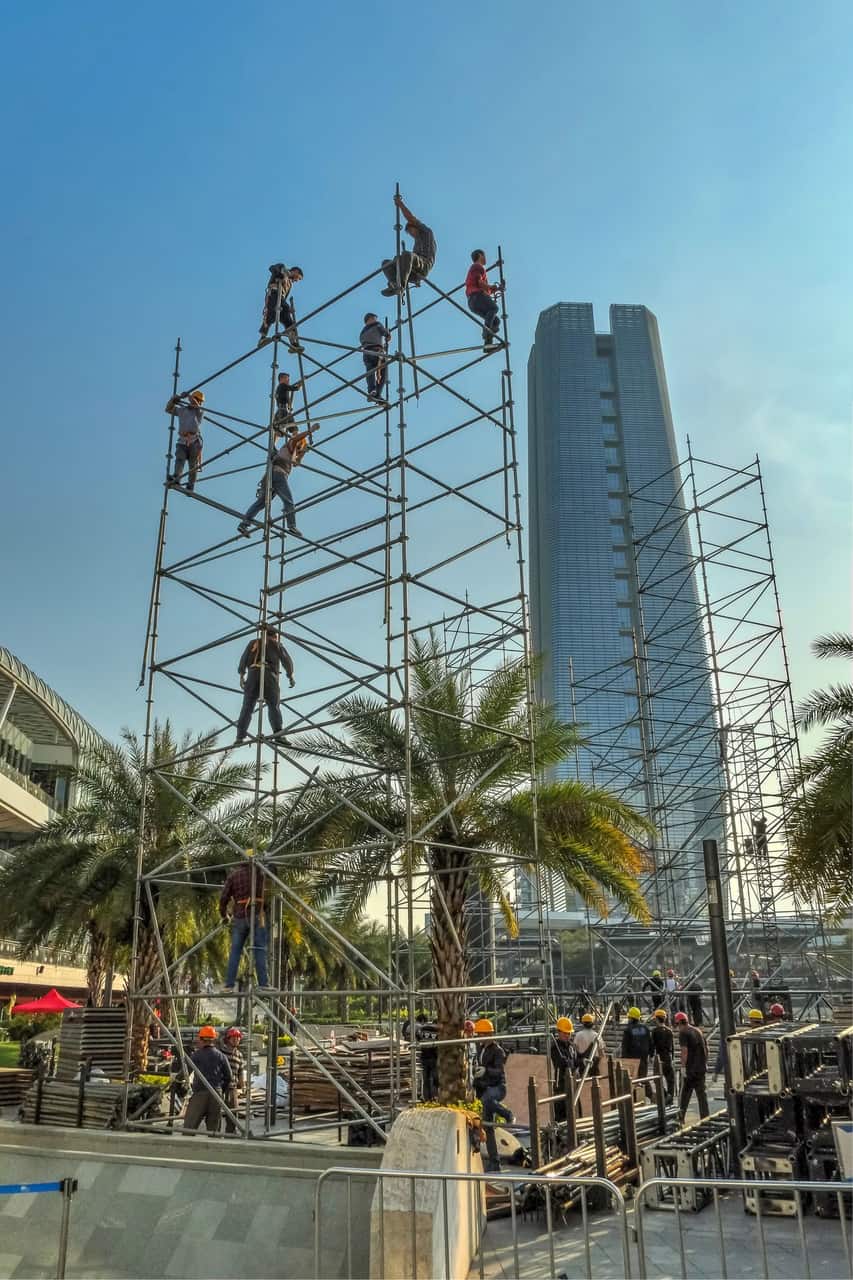
Scaffolding RAMS are reviewed by people who know TG20 and SG4 — so the fastest way to get sent back is to write a generic work-at-height document that never mentions either. The reviewer wants three things established early: whether the scaffold is a standard TG20 compliant configuration or a bespoke design (and if bespoke, that drawings and calculations exist), how your operatives are protected while they erect it (SG4's safe zones, advanced guardrails, harness regime), and how the public and other trades are kept out from underneath.
More detail
The method statement should follow the lift-by-lift reality: base preparation and sole boards, first lift with correct bracing, ties as the elevation rises, edge protection and boarding standards, and the handover inspection. Generic sequences ("erect scaffold safely") read as copy-paste; named stages with the tie pattern and bracing read as a scaffolder wrote it.
Falling materials and the public
Most scaffolding incidents that make it to enforcement involve things, not people, falling. Your RAMS needs the exclusion zone arrangements during erection and dismantling, tube-and-fitting handling (nothing thrown, gin wheel or hoist arrangements stated), and the pavement problem: if the scaffold oversails or lands on public highway, a pavement licence or local-authority permission is part of the paperwork and reviewers check for it.
More detail
Vehicle movements matter too — deliveries and collections are plant operations in a live street or site. Say where the lorry stands, who banks it, and how tube is unloaded without ejecting it across the footway.
Competence, inspection and handover
CISRS cards are the currency of this trade: state the card levels on the job (trainee, scaffolder, advanced) and who supervises. The RAMS should name the handover process — a scaffold isn't finished until it's inspected, tagged and formally handed over, and then re-inspected every 7 days and after weather events under the Work at Height Regulations 2005. Including the inspection regime in the RAMS tells the PC you'll run the scaffold properly after erection day, which is half of what they're worried about.
More detail
Finally, rescue: harness work needs a rescue plan that doesn't begin and end with "call 999". A suspended scaffolder has minutes — name the equipment and the trained rescuer on site.
Scaffolding RAMS FAQs
Do I need a bespoke design or is TG20 enough?
If the scaffold fits a TG20 compliant configuration, the TG20 compliance sheet is your design basis — say so in the RAMS. Anything outside it (loading bays beyond scope, cantilevers, sheeting in wind zones, unusual ties) needs a bespoke design with drawings and calculations, and the RAMS should reference them.
What's the most common reason scaffolding RAMS get rejected?
Silence on how the scaffolders themselves are protected during erection — reviewers expect SG4's safe-zone and advanced-guardrail approach, plus a real rescue plan for harness work. Generic work-at-height controls written for end users of the scaffold don't cover the people building it.
Does the RAMS cover scaffold inspections after handover?
It should state the regime: handover inspection and tag, then every 7 days and after any event that could affect stability (high winds, alterations, impact). The statutory inspections themselves are recorded separately, but the RAMS shows you've planned them.
What about scaffolds on the public highway?
You'll need the council's pavement/structure licence and the RAMS should reference it, along with lighting, hoarding/netting decisions and pedestrian management. PCs and councils both check this.
Can I build a scaffold erection RAMS in the builder?
Yes — the scaffold erection report asks the configuration, public-interface, overhead-services and ladder-access questions, and writes the answers into the document. Free during early access.